Please activate JavaScript in your browser to use all interface options.

-315xx70.png)


Polar Bears Under Rosneft Care at Novosibirsk Zoo Become Parents
16 March 2026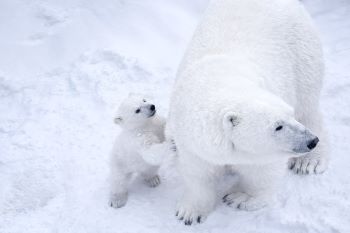 |
| photo by Vladimir Shpakov |
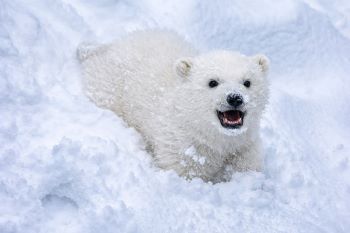
A bear cub was born in the Novosibirsk Zoo to a pair of polar bears that are under the care of Rosneft. The mother bear has emerged from her lair with her newborn cub.
Conservation and protection of the polar bear population is one of the main aspects of Rosneft's environmental programme. Since 2013, Rosneft has been patronising all polar bears in Russian zoos.
Kai and Gerda, the polar bears living at Novosibirsk Zoo, became parents for the first time in 2013. The newborn bear cub is their seventh baby. The bear cub is being monitored by zoologists and vets using cameras installed inside the enclosure complex. The specialists have reported that the baby is active and has a healthy appetite. The sex of the newborn will be determined during the first veterinary examination.
The birth of a polar bear in a zoo is a significant event that contributes to the preservation of the species. The polar bear is listed in the Red Book of the Russian Federation as endangered, as well as in the Red List of the International Union for Conservation of Nature (IUCN) and has the status of a rare or endangered species. The total number of polar bears in Russia is about 4,000 individuals.
Along with the newborn cub, Rosneft currently has responsibility for 37 polar bears across 16 zoos nationwide. The Company provides for the animals' care, feeding and veterinary treatment, as well as the refurbishment and construction of enclosures. It also helps to develop special toys designed to encourage the animals to be more active.
 |
| photo by Vladimir Shpakov |
Rosneft is also implementing a comprehensive programme to support and protect polar bears living in the wild without maternal care. These efforts have resulted in the successful rescue of six orphaned bear cubs in the Russian Arctic.
Since 2014, Rosneft has been conducting expeditions to study polar bears in collaboration with leading Russian scientists. During this period, the Company organised 10 scientific expeditions. In 2024, Rosneft initiated a new four-year cycle of research into northern predator as part of Tamura, its corporate programme for preserving the biodiversity of Arctic ecosystems.
Department of Information and Advertising
Rosneft
March 16, 2026