Please activate JavaScript in your browser to use all interface options.

-315xx70.png)


Rosneft Consolidates Its Technological Leadership in the Russian Oil and Gas Industry
06 February 2026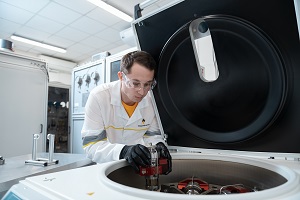
Rosneft secured 77 patents for innovative inventions in 2025. The technology leader in the oil and gas industry currently has 1,178 pieces of intellectual property that have undergone state registration in its portfolio.
In 2025, the Company’s scientists made a number of significant discoveries in the field of rock research. These included a method for determining the chemical composition of rock, developed by specialists in Ufa and Krasnoyarsk. In contrast to previous methods, this innovation is able to show the content of all elements in the rock, including rare earth metals.
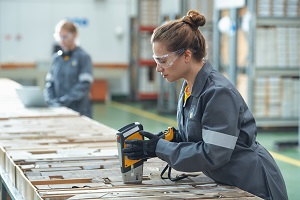 Specialists from institutes in Tyumen and Tomsk have patented a method of determining the relative permeability of phases – that is, the ability of rocks to allow liquids and gases to pass through them. The development focuses on optimising extraction technology and enhancing the efficiency of extracting reserves from deposits with complex geological structures.
Extensive research generates unique findings. While studying the core, scientists in Tomsk discovered well-preserved imprints from the Jurassic period in rock samples, including ray-finned fish, parts of a sea lily and the skeleton of an ophiuroid, which is a distant relative of the starfish. Traces of ancient organic matter enable scientists to identify scattered fragments of flora and fauna more accurately, establish their connections with the environment and determine the conditions that are favourable for the formation and accumulation of oil.
Rosneft is the first Russian oil company to have created and successfully developed a software suite covering all key oil and gas production processes. Corporate software is superior to imported analogues in terms of speed, list of tasks to be solved, application of modern algorithms and clear interface.
The Company’s scientists are actively developing AI tools to solve production problems. In 2025, experts at the Ufa Institute developed EchoTools software, the first domestic software of its kind to use AI to determine the liquid level and sound velocity in the inter-pipe space of a well. These indicators are used by oil workers to calculate bottomhole pressure and select the optimal operating mode for the well, with a view to achieving maximum productivity.
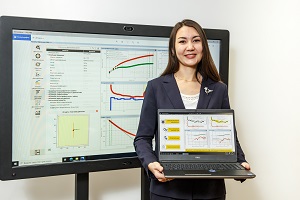 A team of specialists from Samotlorneftegaz and the Company’s Samara Research Institute has developed software based on neural network modelling. This software is intended to optimise the operation of production wells at the Samotlor field. This new digital instrument generated an economic benefit of 100 million roubles in 2025 alone.
Research specialists at a Tyumen-based research institute have developed software called RN-AutoBalance, which is also based on neural network modelling technology. Innovative software automatically calculates optimal well operating modes, thus increasing the efficiency of mature oil field development.
In addition, the Tyumen Institute’s specialists have developed and implemented a software solution using large language models. This innovation reduces the routine workload associated with searching, checking, and formatting text information by 70-80%.
Rosneft is a market leader within the domestic petrochemical industry for catalysts. Specialists at the Novokuybyshevsk Scientific Institute have developed Russia’s first catalogue of hydrocarbon raw material catalysts. A variety of oil refining and petrochemical catalysts have been collected for further analysis and comparison with new products manufactured in Russia and abroad.
The centralised collection and storage of samples in the library facilitates the swift transfer of catalysts for a range of innovative projects and other scientific work, as well as for technological tasks requiring testing and rapid decisions on the selection of catalytic systems.
The Company is continually enhancing the efficiency of its technological equipment. In 2025, scientists at the Ufa Institute achieved a breakthrough by developing and patenting Russia’s first robotic complex for repairing pump and compressor pipes. Two technological lines enable pipes to be repaired and a protective coating to be applied to their inner surface. The complex’s productivity reaches up to 21,000 pipes per month.
 Scientists at the Izhevsk Institute have developed and tested an innovative method of assessing the corrosion rate of oil well equipment. The economic effect of implementing this innovation is estimated to average 1.4 million roubles over a five-year period per well. The new approach is based on measuring the corrosion rate of steel plates in the thermobaric conditions of wells. The process is carried out using special submersible probes, which are also developed by the institute’s specialists. Previously, the corrosion rate was measured inside the cavities of above-ground pipeline infrastructure.
The Company’s research and design unit focuses particularly on creating innovative training simulators to improve the quality of professional training for specialists.
For instance, engineers in Ufa have developed a simulator that combines hardware and software to facilitate training and practice in managing wells equipped with electric centrifugal pump units. The training complex is designed to simulate the operation of submersible equipment and accurately reproduce the technological processes occurring in the well.
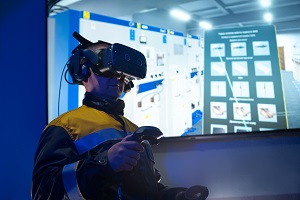
Specialists from the Samara Institute have developed a VR model of the Gerasimovskaya substation belonging to the Orenburgneft enterprise (Rosneft’s production asset), which accurately replicates the real facility. The model includes a virtual simulator that allows users to practise possible scenarios for rapid switching in various emergency situations.
In order to develop the potential of future industry professionals, Rosneft organises a large-scale IT Marathon on an annual basis. Seven competitions are scheduled for 2025, including information modelling contests, the Additive Technologies and Reverse Engineering Cup, the Student Hackathon, the Academic Tournament, and the Geonavigation League. Over 900 participants from 71 cities, 80 companies and 92 universities took part in the intellectual competition.
In 2025, the Company also held two specialised competitions. In Krasnoyarsk, a corporate institute hosted a seismic data interpretation competition that drew over 300 leading specialists. The Tomsk Institute organised the Russia’s first championship for creating digital twins of oil and gas preparation facilities among domestic software product developers.
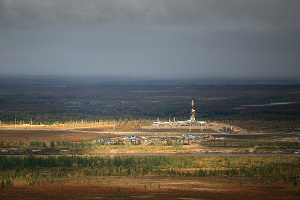 Environment protection is an integral part of the Company’s corporate culture and social responsibility. In 2025, Rosneft experts have developed a ground-breaking oil spill detection technology that will considerably enhance the effectiveness of environmental protection measures in the oil industry. Thanks to a combination of laser scanning and aerial photography, this technology allows to distinguish natural water bodies from oil slicks with high accuracy.
Technological leadership is one of the key items of the Rosneft 2030 Strategy. The Company’s innovation activities are focused on developing and implementing new technologies, products and approaches to business process management.
Rosneft would like to congratulate the Russian scientific community on Russian Science Day!
Department of Information and Advertising
Rosneft
February 6, 2026